


What counts as a mini solar farm?
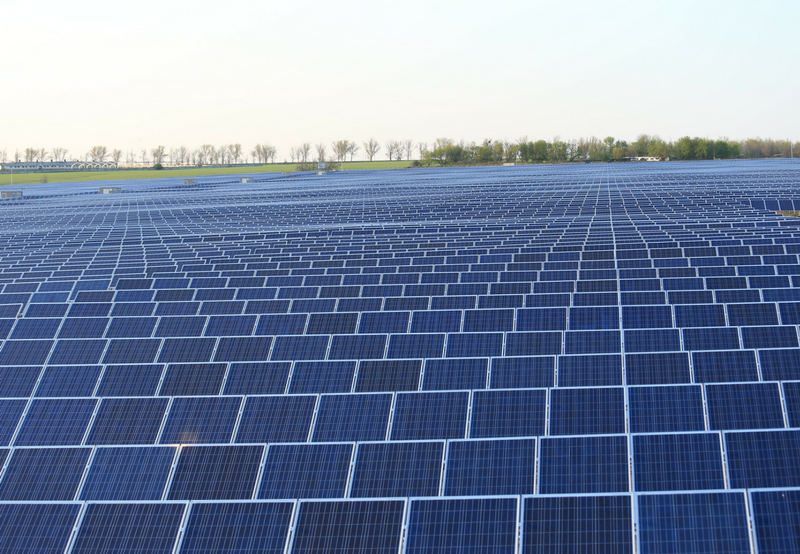
At Enovra we use a simple definition: anything from 50 kW to 500 kW qualifies as a mini solar farm as long as the installation is carried out on a non-residential un-used plot of land, or used for agricultural purposes. Rather than thinking in technical kilowatts, picture the number of panels:
- 50 kW ≈ 90 panels of about 550 W each. That’s a compact array that can fit on a small plot of agricultural land.
- 500kW ≈ 900 panels – a larger installation that still fits comfortably within family owned fields.
Two ways to sell your solar power
Regular MSDG Renewable Energy Scheme
Under the standard MSDG scheme, all the electricity your farm produces are sold to the Central Electricity Board (CEB) at a fixed tariff of ₨ 4.20 per kWh. The grid uses gross metering – everything you generate is exported, and you are paid for every unit. This scheme is open to non-domestic customers, including farmers, cooperatives and small businesses. It’s simple: install solar, connect to the grid, and receive a steady cheque.
CEB Agrivoltaics (CAV) Scheme – higher pay for dual use
If you continue farming beneath your panels – growing crops or raising livestock – you may qualify for the CEB Agrivoltaics (CAV) Scheme, which rewards farmers who combine agriculture and solar power. This programme allocates 20 MW of capacity (2 MW for livestock farmers, 9 MW for existing planters, and 9 MW for new planters). Each project must stay below 500 kWac. The reward? A premium tariff of ₨ 5.00 per kWh exported to the grid and free metering equipment. The scheme supports decarbonising agriculture and contributes to Mauritius’s target of 60% renewable energy in the electricity mix by 2030.
Both the MSDG and CAV schemes, introduced by the Government of Mauritius through the CEB, demonstrate strong national support for clean-energy entrepreneurship and sustainable agriculture.
Simple numbers: why it’s a no-brainer
Every kilowatt you install not only generates income but also strengthens Mauritius’s energy independence and helps meet the 60 % renewable-energy target for 2030.
Here’s a rough illustration using a 50 kW mini farm (~90 panels) in Mauritius:
Two ways to sell your solar power
Regular MSDG Renewable Energy Scheme
Under the standard MSDG scheme, all the electricity your farm produces are sold to the Central Electricity Board (CEB) at a fixed tariff of ₨ 4.20 per kWh. The grid uses gross metering – everything you generate is exported, and you are paid for every unit. This scheme is open to non-domestic customers, including farmers, cooperatives and small businesses. It’s simple: install solar, connect to the grid, and receive a steady cheque.
CEB Agrivoltaics (CAV) Scheme – higher pay for dual use
If you continue farming beneath your panels – growing crops or raising livestock – you may qualify for the CEB Agrivoltaics (CAV) Scheme, which rewards farmers who combine agriculture and solar power. This programme allocates 20 MW of capacity (2 MW for livestock farmers, 9 MW for existing planters, and 9 MW for new planters). Each project must stay below 500 kWac. The reward? A premium tariff of ₨ 5.00 per kWh exported to the grid and free metering equipment. The scheme supports decarbonising agriculture and contributes to Mauritius’s target of 60% renewable energy in the electricity mix by 2030.
Both the MSDG and CAV schemes, introduced by the Government of Mauritius through the CEB, demonstrate strong national support for clean-energy entrepreneurship and sustainable agriculture.
Simple numbers: why it’s a no-brainer
Every kilowatt you install not only generates income but also strengthens Mauritius’s energy independence and helps meet the 60 % renewable-energy target for 2030.
Here’s a rough illustration using a 50 kW mini farm (~90 panels) in Mauritius:
|
Item |
Estimate |
Explanation |
|
System capacity |
50 kW (~90 panels) |
Typical size for a small agricultural or industrial site |
|
Annual energy output |
50 kW × 1,500 kWh/kW/year ≈ 75,000 kWh |
Average production in Mauritian sunlight conditions |
|
Revenue (MSDG @ ₨ 4.20/kWh) |
75,000 × ₨ 4.20 = ₨ 315,000 per year |
Standard tariff under MSDG Phase 2 |
|
Revenue (Agrivoltaics @ ₨ 5.00/kWh) |
75,000 × ₨ 5.00 = ₨ 375,000 per year |
Higher tariff for projects combining crops + solar |
|
Approximate system cost |
₨ 3.0 – 3.5 million |
Full turnkey setup with Servotech panels + Enovra installation |
|
Own contribution (30%) |
₨ 1.05 million |
Typical equity required by banks or DBM |
|
Loan amount (70%) |
₨ 2.45 million |
Financed through a DBM or commercial renewable-energy loan |
|
Typical loan terms |
10 years @ 3 % interest ≈ ₨ 285,000 per year |
Covers both principal and interest |
|
Bank savings alternative |
3 % × ₨ 3.5 m = ₨ 105,000 per year |
What you’d earn by keeping the same amount in a bank deposit |
Figures are indicative for illustration; actual performance depends on site conditions and financing terms.
Table 2: Long-Term Earnings and ROI
|
Scenario |
Annual Revenue |
Loan Repayment (10 yrs) |
Net Profit (Years 1–10) |
Profit (Years 11–25) |
25-Year Total Revenue |
Approx. ROI on ₨ 3.5 m |
|
MSDG Scheme (₨ 4.20/kWh) |
₨ 315,000 |
₨ 285,000 / year |
~₨ 30,000 / year |
₨ 315,000 / year |
₨ 7.9 million |
≈ 225 % |
|
Agrivoltaics Scheme (₨ 5.00/kWh) |
₨ 375,000 |
₨ 285,000 / year |
~₨ 90,000 / year |
₨ 375,000 / year |
₨ 9.4 million |
≈ 270 %
|
Figures are indicative for illustration; actual performance depends on site conditions and financing terms.
✅ Once your loan is fully paid off after 10 years, all income for the next 15 years is pure profit.
✅ Over 25 years, your total returns are roughly 3× your investment — far higher than any fixed-deposit or savings product.
✅ Tariffs are fixed for the contract period, while electricity prices and bank rates fluctuate.
Affordable financing
You don’t need to pay everything upfront. Local banks and the Development Bank of Mauritius (DBM) offer green loans at attractive rates. In fact, project developers can obtain up to 100% of their investment through financing programmes from entities such as the Small Farmers Welfare Fund and the Development Bank of Mauritius Ltd. Enovra will help you secure the right loan so that your cash flow stays positive from day one.
These renewable-energy loans make it easier than ever to start a mini solar farm in Mauritius without large upfront capital.
Why Enovra makes it easy
- 100% Mauritian: Led by founder Nadir Soobratty, our local team ensures your investment stays in Mauritius—creating jobs and building national expertise in clean energy.
- Official Servotech partner: We are the exclusive redistributor of Servotech Renewable Power Systems Ltd in Mauritius. That means top quality panels and inverters at factory direct prices.
- Turnkey service: We handle application paperwork, technical design, financing arrangements, construction, commissioning and aftersales support. You don’t need to coordinate with multiple contractors—just watch your solar farm come to life.
- Agrivoltaic expertise: Enovra works with agronomists to design dual use systems that keep your fields productive while harvesting sunlight. The CAV scheme pays more, and your crops benefit from shade and reduced evaporation.
Ready to transform your land?
If you own agricultural land and want to earn more than a bank deposit while contributing to Mauritius’s clean energy future, a mini solar farm is the answer. Starting at around 90 panels, you can generate hundreds of thousands of rupees every year, support national renewable energy goals and help decarbonize agriculture.
Contact the Enovra team today on info@enovra.mu or on +230 59 19 09 93. We’ll assess your site, model your energy yield and revenue, secure affordable financing and walk you through every step—from panel number to profit.